
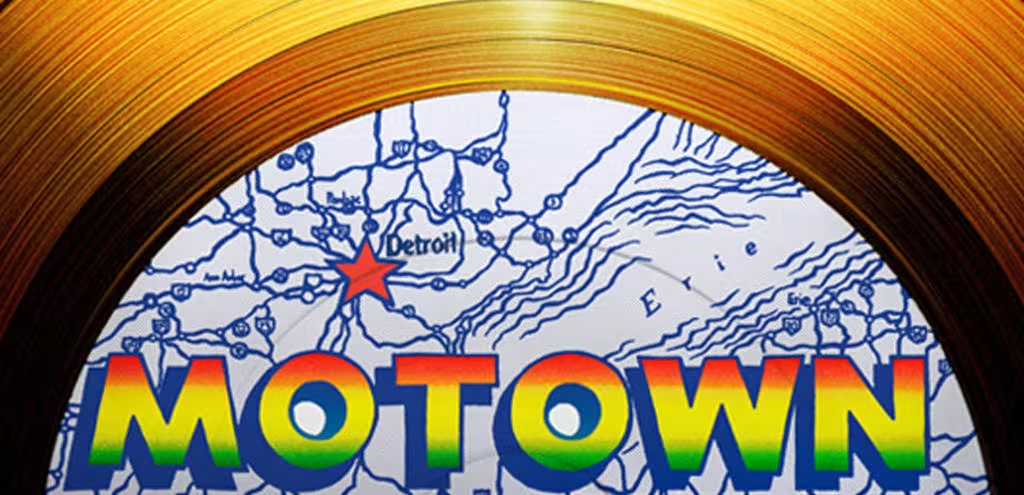
In January 1959, an ambitious former boxer and record store owner named Berry Gordy Jr. borrowed eight hundred dollars from his family co-op fund to establish Hitsville USA in a modest Detroit house. Operating in a deeply segregated America marred by racial inequality and social tension, Motown Records achieved an unprecedented cultural feat: building a Black-owned music empire that dominated mainstream pop music charts. Through meticulous songwriting, legendary studio craftsmanship, and sophisticated image finishing, Motown created a universal sonic aesthetic that brought Black and white audiences together. This historical progression fundamentally reshaped American soul music history worldwide.
Studio A Snake Pit Funk Brothers and car radio test playbacks
At the heart of Motown’s legendary recording operation was Studio A, a converted garage nicknamed the Snake Pit, where groundbreaking musical magic was captured on tape around the clock. The studio’s unmatched rhythm section, an unsung group of master jazz and session musicians known as The Funk Brothers, recorded the instrumental backbones for thousands of timeless hits. Bassist James Jamerson, drummer Benny Benjamin, and guitarist Joe Messina created syncopated grooves, melodic basslines, and driving rhythms that defined sixties pop music. This historical progression fundamentally reshaped American soul music history worldwide.
To ensure their vinyl records cut through small AM transistor car radio speakers and jukeboxes, Motown audio engineers designed custom recording consoles and unique echo chambers. Engineers utilized heavy equalization boost at five kilohertz to accentuate snare drum snap and vocal presence, alongside aggressive multi-track compression to maintain maximum loudness. Gordy conducted regular car radio test playbacks, auditioning master tapes on a low-fidelity automobile radio transmitter to verify how songs sounded in realistic consumer environments. This historical progression fundamentally reshaped American soul music history worldwide.
Songwriting and production teams like Holland-Dozier-Holland and Norman Whitfield functioned like an assembly line, crafting pop gems with mathematical precision and infectious hooks. Masterpieces by The Supremes, The Temptations, Marvin Gaye, and Four Tops featured irresistible call-and-response vocal arrangements, driving handclaps, and lush orchestral string sections. Holland-Dozier-Holland wrote lyrics that resonated with universal human emotions, transcending regional, social, and racial boundaries across global audiences. This historical progression fundamentally reshaped American soul music history worldwide.
Artist development civil rights integration and crossover pop hits

Berry Gordy recognized that conquering conservative mainstream radio and television broadcasts required meticulous professional preparation and elegant visual presentation for Black artists. Motown established an internal Artist Development department directed by Maxine Powell, who taught young singers sophisticated etiquette, poise, graceful choreography, and elegant wardrobe styling. Cholly Atkins choreographed slick, synchronized stage routines that transformed Motown groups into sophisticated visual icons during live television appearances. This historical progression fundamentally reshaped American soul music history worldwide.
During an era when civil rights activists fought against systemic segregation across the American South, Motown artists broke racial barriers by performing to integrated concert audiences. Hitsville artists embarked on national Motortown Revue package tours, performing before enthusiastic crowds in segregated venues where rope barriers dividing Black and white audience members were spontaneously torn down. Music provided a powerful common language, fostering racial integration and shared cultural pride. This historical progression fundamentally reshaped American soul music history worldwide.
Motown’s commercial success shattered longstanding music industry prejudices that Black artists could only appeal to specialized R&B rhythm-and-blues audiences. Legendary vocalists like Diana Ross, Stevie Wonder, and Smokey Robinson achieved unprecedented crossover pop chart dominance, earning the label its proud official slogan: The Sound of Young America. Motown proved that Black executives, songwriters, and performers could build a world-class commercial entertainment empire. This historical progression fundamentally reshaped American soul music history worldwide.
Socially conscious soul LA transition and modern sampling legacy
As the social landscape of the late 1960s shifted amid civil rights protests and the Vietnam War, Motown artists evolved from polished pop singers into socially conscious cultural voices. Marvin Gaye’s landmark 1971 concept album What’s Going On tackled environmental destruction, urban poverty, and war, overcoming initial executive resistance to become an enduring artistic masterpiece. Stevie Wonder assumed full creative control over his recordings, releasing a string of classic seventies albums that expanded musical complexity. This historical progression fundamentally reshaped American soul music history worldwide.
The relocation of Motown’s corporate headquarters from Detroit to Los Angeles in 1972 marked the end of the classic Hitsville era, as the label expanded into film production and television specials. While the physical move separated Motown from its original Detroit roots, the label’s immortal catalog continued to influence generations of pop, soul, and R&B creators worldwide. Motown’s iconic grooves provided foundational sample sources for modern hip-hop production and electronic dance music. This historical progression fundamentally reshaped American soul music history worldwide.
In contemporary pop history, the Motown sound remains celebrated as a golden standard of songwriting craft, arrangement brilliance, and studio production quality. Hitsville USA proved that music possesses the unique cultural power to break down social barriers, challenge racial prejudices, and unite diverse communities under a single rhythmic groove. Motown’s enduring musical legacy stands as an immortal monument to artistic excellence and social transformation. This historical progression fundamentally reshaped American soul music history worldwide.
Hitsville museum preservation and the enduring Sound of Young America
Museums like the Motown Museum in Detroit preserve Studio A in its original 1960s condition, drawing music lovers and historians from across the globe every year. Visitors stand in the original Snake Pit studio room, marveling at the humble physical space where some of the greatest pop recordings in history were cut onto tape. Preserving Hitsville USA honors the master musicians and visionary leaders who built a lasting cultural monument. This historical progression fundamentally reshaped American soul music history worldwide.
Modern soul and R&B artists continue to draw direct inspiration from Motown’s classic songwriting structures, organic rhythm sections, and expressive vocal delivery. The timeless appeal of Motown melodies across digital streaming platforms proves that genuine emotional craftsmanship transcends shifting technological trends. Hitsville songs remain central soundtrack selections for major motion pictures, television shows, and global family celebrations. This historical progression fundamentally reshaped American soul music history worldwide.
Berry Gordy’s vision of an integrated American pop landscape stands fully realized, having permanently reshaped global popular culture through the universal power of soul music. Motown Records demonstrated that artistic passion, rigorous discipline, and uncompromising quality control could overcome immense social obstacles to achieve immortal global greatness. The Sound of Young America remains an enduring celebration of human harmony and creative brilliance. This historical progression fundamentally reshaped American soul music history worldwide.