
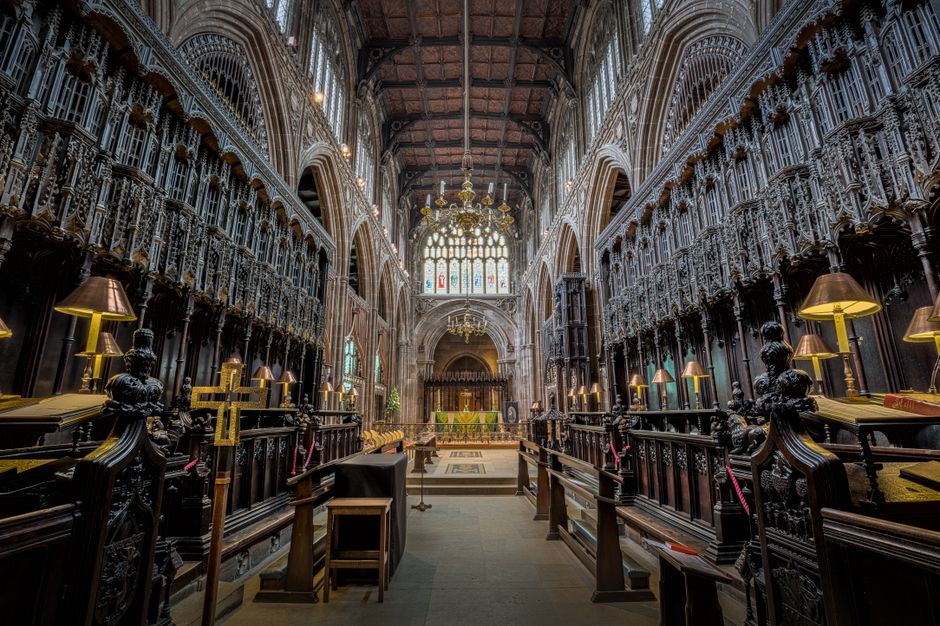
For over two millennia, sacred music was composed, performed, and experienced inside monumental stone structures designed to connect human worship with the divine. Long before electronic amplifiers, artificial digital reverbs, or studio equalizers existed, the physical architecture of ancient temples, stone basilicas, and soaring Gothic cathedrals functioned as massive natural acoustic resonators. The structural volume, vaulted ceiling geometry, and hard stone materials of sacred spaces directly dictated how vocal melodies were composed, shaped, and preserved across European history. This historical progression fundamentally reshaped sacred music architecture worldwide.
Romanesque vaults Gregorian chant and Notre Dame polyphony
In the early Christian church and medieval monastic orders, sacred music consisted primarily of monophonic Gregorian chant sung unaccompanied by monastic choirs. Early Romanesque churches featured thick stone walls, small round arches, and massive barrel vaults that generated long, dense room reverberation times exceeding four to six seconds. Single-line vocal melodies evolved to harmonized with these cavernous acoustic reflections, prioritizing slow, sustained vocal notes that allowed modal tones to reverberate throughout stone naves. This historical progression fundamentally reshaped sacred music architecture worldwide.
If a medieval choir attempted to sing fast, complex rhythmic passages inside a Romanesque cathedral, consecutive musical notes bled together into an unintelligible muddy smear of sound. Monastic composers instinctively adapted their sacred compositions to match room acoustics, using step-wise melodic motion and long held final notes that allowed natural room resonance to amplify sacred Latin texts. Acoustic physical constraints shaped sacred chant into a contemplative, floating spiritual meditation. This historical progression fundamentally reshaped sacred music architecture worldwide.
The architectural transition from Romanesque vaults to soaring Gothic cathedrals in the twelfth century represented a monumental breakthrough in structural engineering and acoustic design. Architectural innovations like pointed arches, ribbed vaults, and flying buttresses allowed master builders to construct soaring, light-filled stone cathedrals with vast vertical interior volumes. Landmarks like Notre-Dame de Paris and Chartres Cathedral possessed magnificent acoustic properties that inspired new musical composition techniques. This historical progression fundamentally reshaped sacred music architecture worldwide.
Gothic cathedrals polychoral St Marks and spatial audio origins
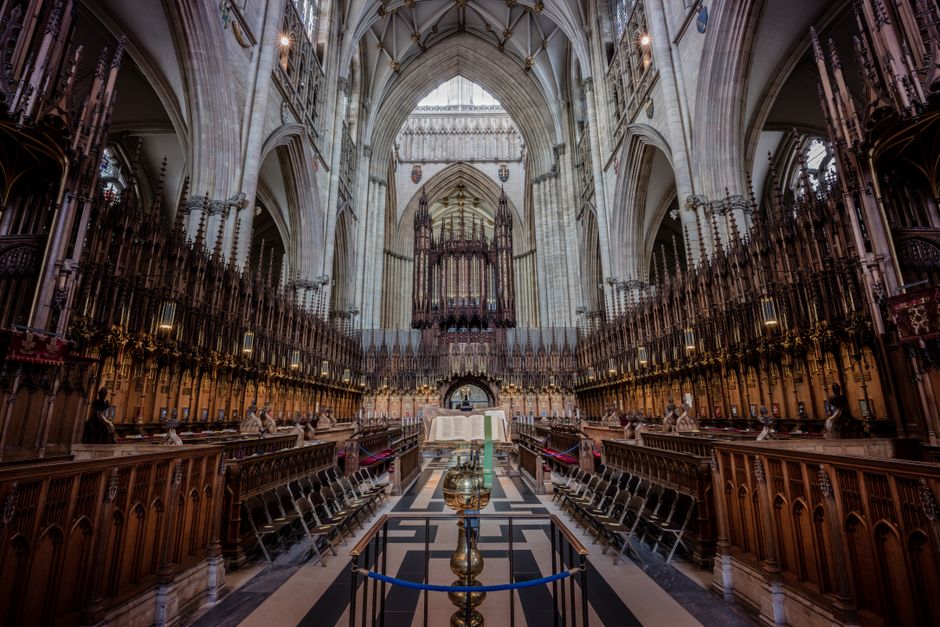
Inside Notre-Dame de Paris during the late twelfth century, composer Léonin and his successor Pérotin pioneered organum, the earliest form of complex Western polyphonic vocal music. The Notre-Dame School composed multi-voiced vocal works where a slow-moving foundational vocal line (tenor) held long sustained notes while upper voices performed faster melismatic counterpoint above it. Cathedral reverberation blended these independent vocal lines into rich, shimmering harmonic chords that filled soaring Gothic vaults. This historical progression fundamentally reshaped sacred music architecture worldwide.
During the Renaissance, architectural acousticians and church master builders intentionally incorporated acoustic geometry into church construction to optimize choral clarity. The grand St. Mark’s Basilica in Venice, with its unique Greek cross layout and multiple elevated choir balconies, inspired the development of polychoral music (cori spezzati). Composers like Andrea and Giovanni Gabrieli placed opposing vocal choirs and brass ensembles in separate balconies across the basilica, creating stereo spatial sound. This historical progression fundamentally reshaped sacred music architecture worldwide.
Audience members inside St. Mark’s Basilica experienced surround-sound musical acoustics as antiphonal choral phrases bounced off gilded mosaic domes across the central nave. The physical spatial separation of choral balconies allowed fast contrapuntal lines to remain clear and distinct despite cathedral reverberation, establishing spatial audio concepts that influenced Western instrumental composition. Architecture directly inspired the creation of multi-choir sacred masterpieces. This historical progression fundamentally reshaped sacred music architecture worldwide.
Protestant Reformation Lutheran chorales and church pipe organs
The Protestant Reformation during the sixteenth century introduced radical changes to church architecture and sacred music style, emphasizing congregational singing and vernacular text clarity. Protestant churches favored simpler, timber-roofed rectangular designs that offered shorter reverberation times and superior speech intelligibility. Composers like Johann Sebastian Bach composed intricate polyphonic chorales and organ fugues tailored specifically for the intimate acoustics of Lutheran churches like St. Thomas in Leipzig. This historical progression fundamentally reshaped sacred music architecture worldwide.
Church pipe organs were meticulously voiced by master organ builders to match the acoustic volume and resonant frequencies of specific church interiors. Organ builders adjusted pipe wind pressures, pipe alloy compositions, and acoustic scaling to ensure deep pedal stops energized room modes without causing harsh acoustic distortion. The physical pipe organ and church architecture existed as a unified musical instrument, resonant and harmonically balanced. This historical progression fundamentally reshaped sacred music architecture worldwide.
In contemporary archaeoacoustics, scientists use impulse response measurements and 3D laser scanning to model the acoustic properties of ancient sacred spaces. Researchers reconstruct how ancient Romanesque and Gothic cathedrals sounded centuries ago, revealing how subtle architectural changes altered choral performance dynamics. Archaeoacoustic studies confirm that medieval builders possessed sophisticated empirical acoustic knowledge that guided sacred design. This historical progression fundamentally reshaped sacred music architecture worldwide.
Archaeoacoustics modern cathedral recording and digital reverb legacy
Modern choral composers and sacred recording ensembles continue to seek out historic stone cathedrals for their irreplaceable natural acoustic reverberation and emotional majesty. Recording inside ancient cathedrals captures organic acoustic decay and spatial depth that digital reverb plugins cannot replicate. The physical interplay between human voice, stone architecture, and natural air reflections remains the gold standard of sacred recording. This historical progression fundamentally reshaped sacred music architecture worldwide.
Spatial audio technology, binaural recording, and 3D convolution reverbs allow modern digital producers to capture impulse responses from famous cathedrals worldwide. Producers can apply the exact acoustic reverb profile of Notre-Dame or St. Mark’s Basilica to modern studio recordings with mathematical precision. Digital acoustic preservation ensures that the sonic beauty of ancient sacred architecture remains accessible to digital creators everywhere. This historical progression fundamentally reshaped sacred music architecture worldwide.
From humble monastic stone chapels to soaring Gothic cathedrals, the evolution of sacred architecture stands as an immortal monument to human spiritual and artistic expression. Physical stone walls did not merely house sacred music; they actively listened, reshaped, and elevated sacred composition into divine art. The symbiotic bond between architecture and sacred music remains one of the most profound chapters in cultural history. This historical progression fundamentally reshaped sacred music architecture worldwide.