

When a modern symphony orchestra prepares to perform in any concert hall across the globe, the principal oboe sounds a single, clear concert A note vibrating precisely four hundred and forty times per second. Every string player, woodwind instrumentalist, and brass musician meticulously tunes their instrument to match this fundamental benchmark frequency before a single musical note is played. Yet, for thousands of years of human music history, universal pitch standardization did not exist, creating chaos for touring musicians and instrument builders. This historical progression fundamentally reshaped global pitch standardization worldwide.
Regional pitch chaos tuning forks and classical composer standards
Throughout the Renaissance and Baroque eras, pitch standards varied wildly from city to city, cathedral to cathedral, and organ builder to organ builder across Europe. In seventeenth-century Germany and France, church organs were tuned anywhere from four hundred Hertz to four hundred and eighty Hertz, representing pitch discrepancies greater than two whole musical semitones. A organ built in Paris sounded drastically lower in pitch than a cathedral organ built in North Germany, making cross-border musical collaboration physically impossible. This historical progression fundamentally reshaped global pitch standardization worldwide.
Musicians travelling between European cities were forced to carry multiple tuning pipes, transposing sheet music on the fly or altering instrument string tensions to match local church organs. Pitch variations severely strained singers’ vocal cords, as performing vocal works written in high-pitch regional centers like Venice caused acute vocal fatigue. Furthermore, instrument makers faced immense economic inefficiency, as wind instruments built in one region could not be played in neighboring cities without custom physical modification. This historical progression fundamentally reshaped global pitch standardization worldwide.
The invention of the steel tuning fork by English trumpeter John Shore in 1711 provided the first portable, physically stable pitch reference that resisted ambient temperature fluctuations. Legendary classical composers cherished their personal tuning forks; George Frideric Handel used a tuning fork vibrating at 422.5 Hertz, while Wolfgang Amadeus Mozart relied on a fork tuned to 421.6 Hertz. These classic tuning references demonstrate that classical masterpieces were originally performed significantly flatter than modern concert pitch. This historical progression fundamentally reshaped global pitch standardization worldwide.
Concert pitch fever French legislation and ISO standardization
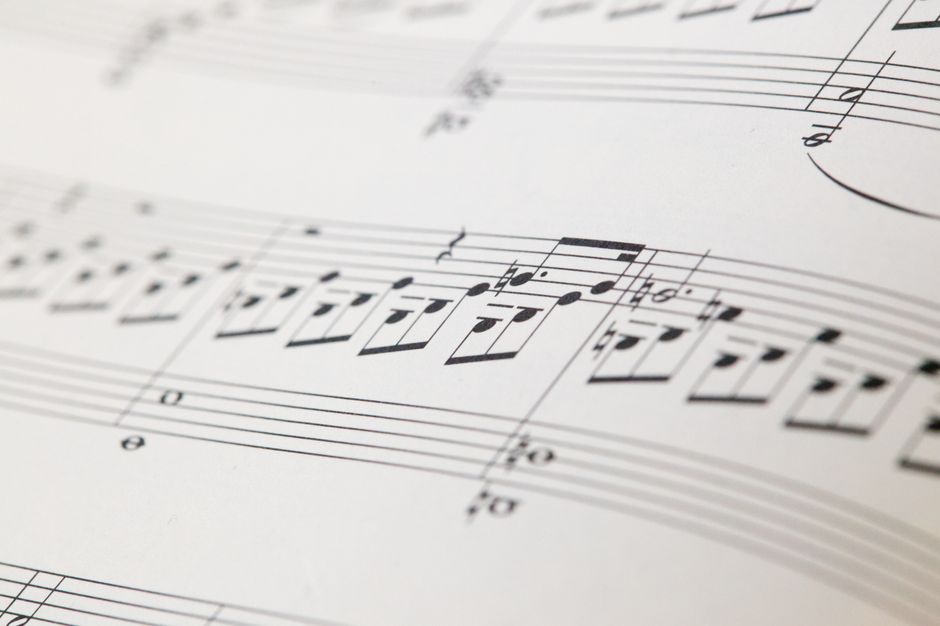
Throughout the nineteenth century, orchestra pitch rose steadily across Europe in a competitive acoustic phenomenon known as pitch inflation or concert pitch fever. Orchestral conductors and brass instrument manufacturers discovered that tuning stringed instruments to higher pitch frequencies produced brighter, more piercing, and acoustically brilliant orchestral sound in large concert halls. By the mid-nineteenth century, orchestral pitch in opera houses like London and Vienna reached dizzying heights exceeding four hundred and fifty Hertz. This historical progression fundamentally reshaped global pitch standardization worldwide.
Extreme pitch inflation provoked fierce resistance from opera singers, whose vocal health suffered under the relentless pressure to belt high notes above inflated orchestra tuning. In 1859, the French government intervened by enacting national legislation that established Diapason Normal, fixing official French concert pitch at four hundred and thirty-five Hertz at fifteen degrees Celsius. Celebrated opera composer Giuseppe Verdi advocated passionately for a lower standard pitch of 432 Hertz, which remains known today as Scientific or Verdi pitch. This historical progression fundamentally reshaped global pitch standardization worldwide.
In the early twentieth century, the rapid growth of international broadcasting, gramophone record distribution, and global instrument manufacturing demanded an international pitch agreement. In 1939, an international conference held in London under the auspices of the International Federation of the National Standardizing Associations recommended four hundred and forty Hertz as the global concert pitch benchmark. The International Organization for Standardization (ISO) officially reaffirmed A440 in 1955, solidifying four hundred and forty Hertz as ISO 16. This historical progression fundamentally reshaped global pitch standardization worldwide.
Global manufacturing historical performance and 432 Hertz debates
Establishing A440 as the global concert pitch benchmark revolutionized international instrument manufacturing, enabling mass-produced pianos, woodwinds, and synthesizers to be shipped worldwide. Electronic synthesizers, digital keyboards, and digital audio workstations incorporate A440 as their factory default tuning, ensuring digital instruments harmonize with acoustic recordings effortlessly. Global standardization allowed international touring musicians to collaborate across continents without encountering regional tuning friction. This historical progression fundamentally reshaped global pitch standardization worldwide.
Despite official ISO international standardization, lively debates regarding concert pitch benchmark selection persist among contemporary musicians, acousticians, and historical performance ensembles. Period-instrument baroque orchestras regularly reject A440 in favor of historical pitch standards like A415 for Baroque repertoire and A430 for Classical masterworks. Early music specialists argue that performing Bach and Vivaldi at historical lower pitch restores authentic instrumental timbres and vocal resonances. This historical progression fundamentally reshaped global pitch standardization worldwide.
Alternative tuning enthusiasts across internet communities champion 432 Hertz, claiming that tuning to lower mathematical frequencies resonates with natural acoustic geometry. While scientific physics disproves mystical claims regarding 432 Hertz, many acoustic guitarists and ambient electronic artists prefer lower pitch tunings for their relaxed, warm acoustic character. Musical flexibility demonstrates that while A440 serves as an essential commercial standard, artistic pitch choices remain subjective. This historical progression fundamentally reshaped global pitch standardization worldwide.
Digital precision streaming baseline and the modern acoustic anchor
In modern symphonic halls, high-precision digital electronic tuners and strobe tuners allow musicians to verify A440 tuning accuracy down to fractions of a single cent. Temperature and humidity inside concert halls continue to cause subtle thermal pitch fluctuations in woodwind and string instruments during live performances. Orchestral musicians continuously make micro-adjustments during live symphonic concerts to maintain flawless intonation relative to the central A440 oboe reference. This historical progression fundamentally reshaped global pitch standardization worldwide.
Global pitch standardization laid the essential foundation for international music streaming networks, digital audio processing, and global broadcasting synchronization. Audio compression algorithms, pitch-shifting software, and auto-tuning plugins rely on A440 as their central mathematical baseline for real-time frequency processing. Universal pitch consistency allows digital music platforms to deliver harmonious listening experiences across millions of catalog recordings. This historical progression fundamentally reshaped global pitch standardization worldwide.
From John Shore’s humble 1711 tuning fork to ISO 16 international consensus, the journey toward A440 reflects humanity’s quest for acoustic order and global harmony. Establishing four hundred and forty Hertz as the universal pitch benchmark enabled unprecedented international collaboration, expanding musical creation across human culture. Today, A440 remains the invisible acoustic anchor uniting global music performance. This historical progression fundamentally reshaped global pitch standardization worldwide.